
Article3 min read
Why lane risk assessment is the cleanest first use case for AI in pharma
Lane risk assessment has lived inside a single annual qualification exercise for too long. The economics of revisiting that decision continuously have changed.
On this page
Ask any pharma supply chain leader how lane risk assessment works today, and the answer is almost always the same: Before a lane is opened, a team gathers carrier documentation, climatic data, and assumptions about handling. They produce a risk score. If the score is acceptable, they deem the lane operational, ship product, and rarely change the assessment.
That model was fine when changing the assessment meant commissioning another working group. It’s no longer fine, because the cost of revisiting the assessment has collapsed, and the cost of not revisiting it has risen.
The case for dynamic lane risk
Two things have changed. First, the volume of real-time shipment data on most leading pharma networks has grown to the point where every active lane is producing a steady stream of evidence about how that lane actually performs. Temperature, dwell time, hand-off points, and carrier behavior in real time. Second, AI agents working over that curated data can compress the analysis from weeks of analyst work to about a minute.
Together, those two shifts make dynamic lane risk assessment practical for the first time. Instead of a static risk score that becomes obsolete the moment a shipment leaves the dock, lane risk is a living metric, updated every time new shipment data comes in, seasonality shifts, or a carrier changes hub.
“You may start off with a very robust solution at your first launch. And then, based on your data, you can possibly come down to a solution that is more fit for purpose.”
First-launch conservatism is the right answer in the absence of evidence, but when the evidence accumulates over months and seasons, the same conservatism becomes expensive. Once you replace assumption with data, lanes earn a leaner risk profile only by demonstrating the data to justify it.
Why it is the cleanest place to start
Of the AI use cases pharma supply chain leaders are currently weighing, lane risk has the lowest friction for several reasons: the data already exists, the decision boundary is clean, and the qualification path is well understood.
Real-time monitoring has been in place on leading networks for several years. The historical record is deep enough to support meaningful analysis, and the data pipeline is, on the whole, already validated.
Lane risk assessment is, fundamentally, about graduating a lane up or down in conservatism. That maps neatly onto a recommendation framework: keep, downgrade, upgrade. There is no ambiguity about the action.
Pharma already qualifies lanes, packaging, and routes regularly. AI does not change the qualification regime; it simply changes the cadence of the prompt. A dynamic risk score that ‘flags a lane for re-qualification’ is well within the language of existing quality systems.
What it actually changes for the team
There are three key downstream effects:
Cost matches risk continuously, not annually
Lanes that have been over-engineered since launch finally get reviewed against what they actually do, not what was assumed at the time. Across hundreds of lanes, the cumulative effect on cost is material.
Risk signals surface faster
A deteriorating lane shows up in the dynamic risk picture before it shows up as an excursion. That changes the conversation with the LSP from corrective action to preventive action.
First-launch conservatism stops being a ceiling
The conservative qualification at first launch remains the right starting point. It just stops being permanent. Lanes earn the right to a lighter footprint by demonstrating the data to justify it.
For most pharma supply chain teams, the question is no longer whether to make lane risk dynamic. It is which corridor to start with.
More articles
All insights
What a cosmologist, a drug rescuer, and a Nobel laureate can teach the pharma supply chain
Lessons from TEDAI Vienna for the pharma supply chain: learn from every failure, enforce limits in the system, keep people on the decisions that matter, optimize for the whole chain, and feed AI data it can trust.
Read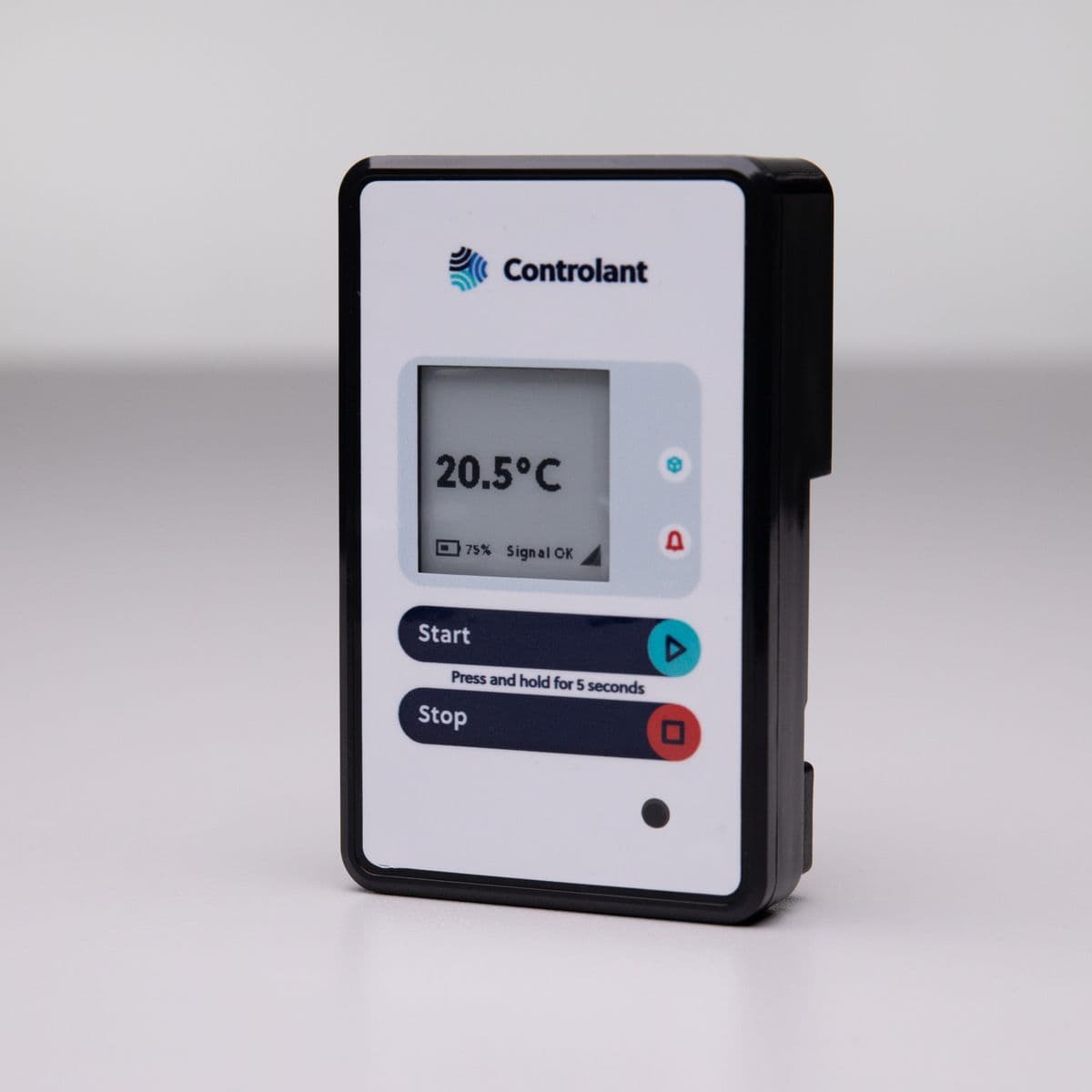
Why real-time temperature monitoring, and when it isn't worth it
A device read on arrival and one that reports in transit record the same excursion. Real-time changes when someone finds out, and so what they can still do: cut it short, release on arrival, fix the lane. Where that pays, and where a device read on arrival is the better choice.
Read
Six first moves for AI in the pharma cold chain
With AI already seeping into your pharma cold chain operations, how confident are you that the plumbing underneath can take the pressure? Here are six practical first moves, distilled from our recent industry whitepaper on real-time monitoring and AI.
ReadSee what this looks like in the platform
Tell us what you ship and where, and we'll show you the platform on routes and products like yours.